Choose the Right Workbench

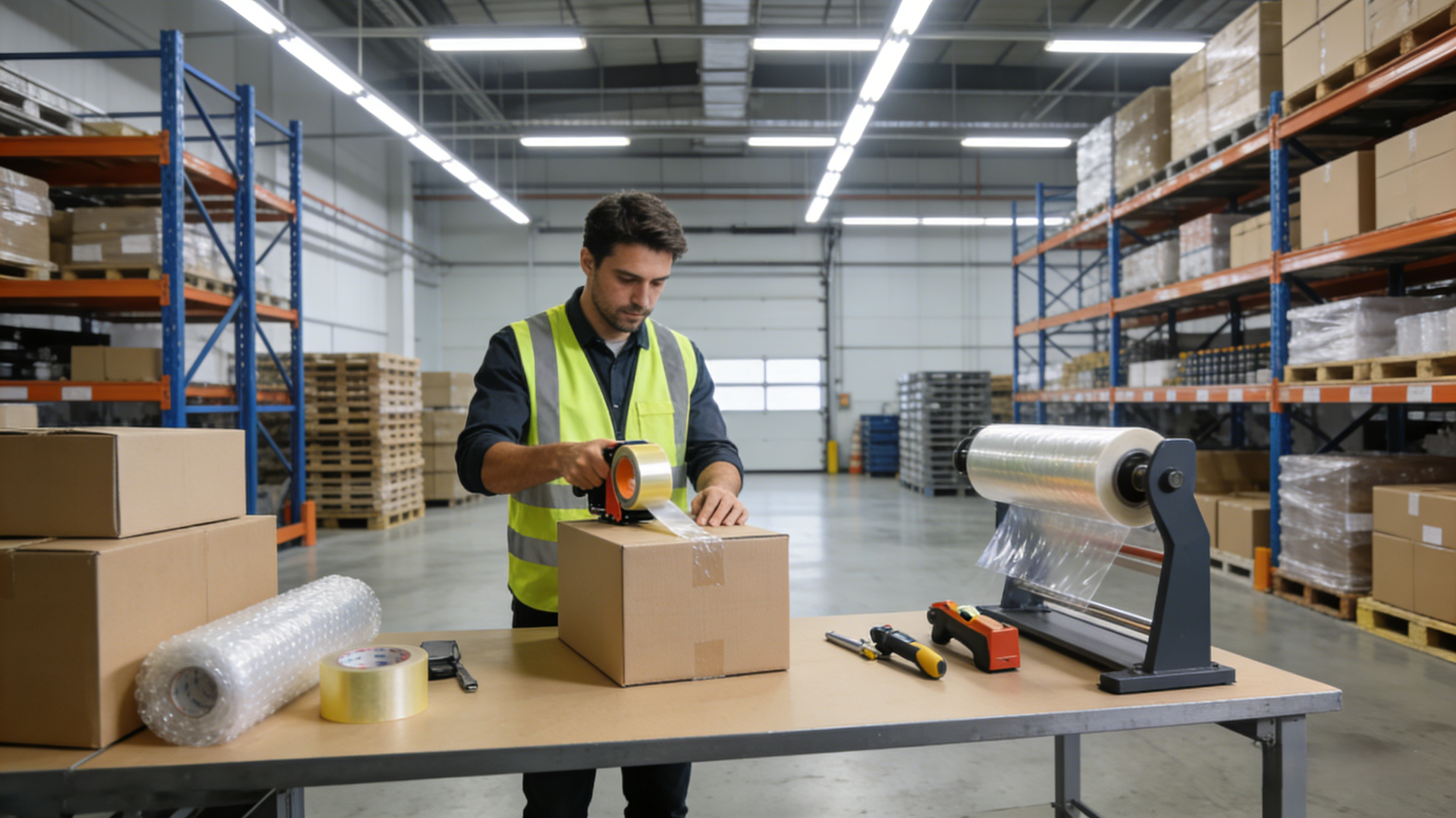
A good packing table boosts productivity 20–30%, reduces fatigue. Choose based on ergonomics, durability, load, and workflow.
Core Factors
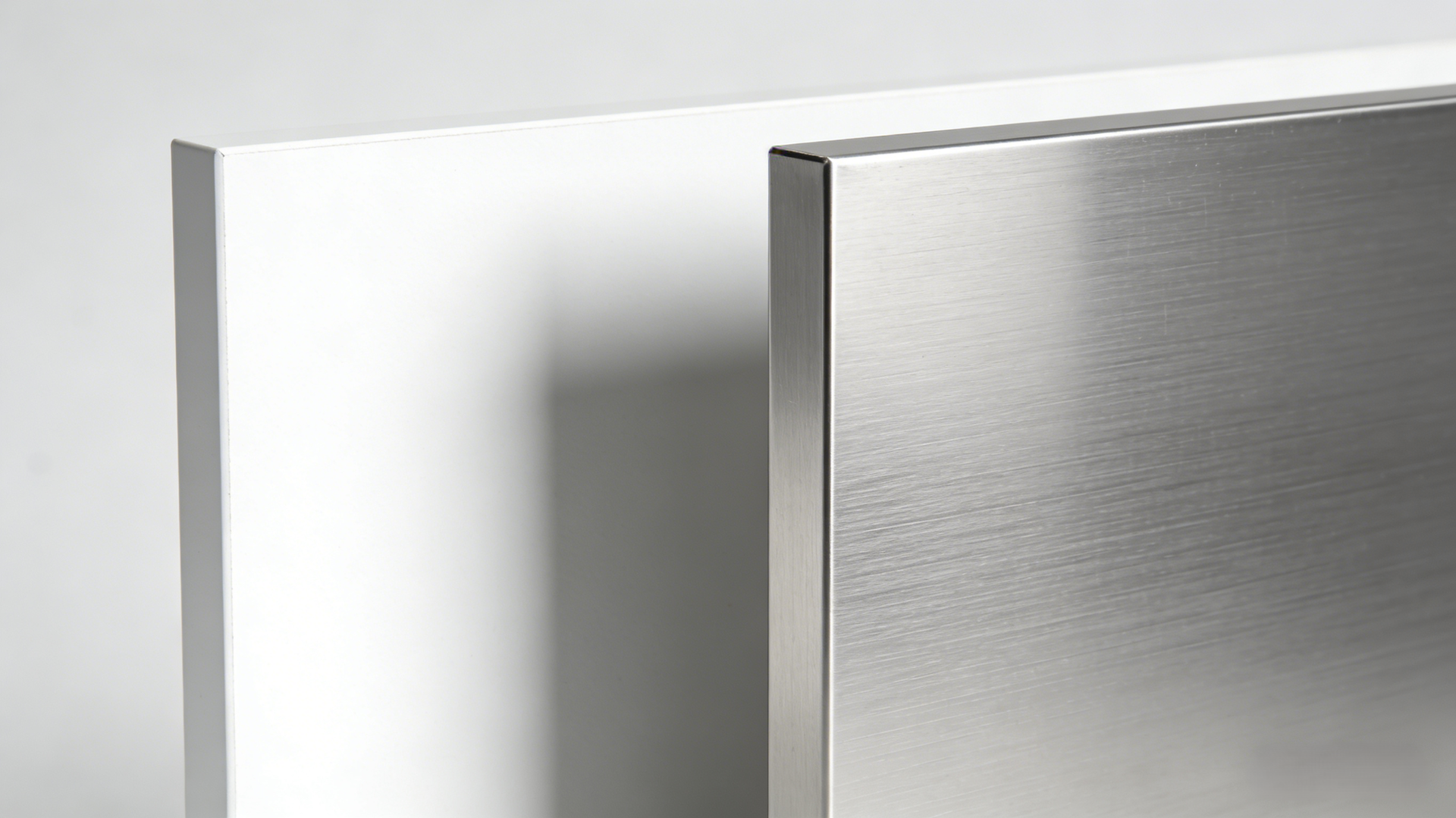
1. Tabletop Material
| Material | Best For |
|---|---|
| Anti-static (ESD) | Electronics packing |
| Solid wood | Light retail (≤50 lbs) |
| Steel (powder-coated) | Heavy/industrial parts |
| Impact-resistant composite | Food/pharma, humid areas |
Pro Tip: Composite + ESD overlay balances versatility and cost.
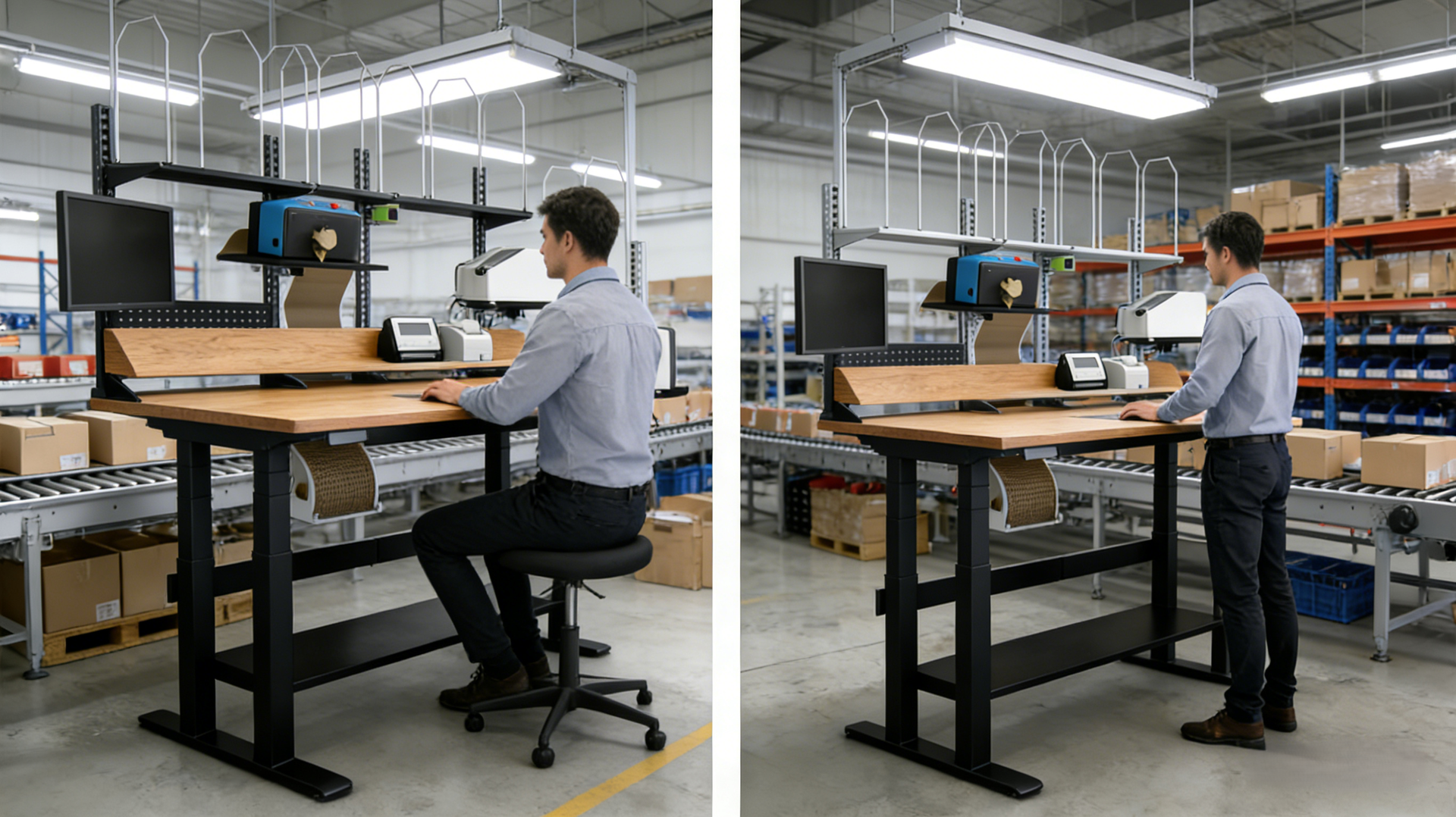
2. Height Adjustability
- Fixed (30–36″): $100–300, consistent height teams
- Manual crank (24–42″): $200–500, mixed heights
- Electric lift (20–48″): $800–1,500, high-volume (payback 6–9 mo)
3. Weight Capacity (total load)
- Light: 100–250 lbs (e‑commerce poly mailers)
- Medium: 250–500 lbs (retail cartons)
- Heavy: 500–1,000+ lbs (industrial parts)
4. Size & Layout
- Single-worker: 30–36″D × 48–60″W
- Multi-worker (double-sided): 36–48″D × 72–96″W
- Mobility: fixed (stable) or locking casters ($50–150)
5. Add-Ons
- Material racks (reduce reach time 15%)
- Power/USB (UL-listed)
- Garbage chutes (cut cleanup 20%)
- Task lighting, drawer storage
Scenario-Based Selection
| Feature | Light E‑commerce (≤50 lbs) | Heavy Industrial (>250 lbs) |
|---|---|---|
| Material | Anti-static composite/wood | Powder-coated steel |
| Height | Electric lift | Fixed/manual |
| Capacity | 250 lbs | 750+ lbs |
| Key add-ons | Power ports, label holder, garbage chute | Shelving, tool hooks, non-slip mat |
| Feature | Single Worker (≤100 orders/day) | Multi-Person (≥200 orders/day) |
|---|---|---|
| Size | 48″W × 30″D | 96″W × 48″D (double-sided) |
| Mobility | Casters | Fixed |
| Cost | $300–800 | $1,200–2,500 |
Recommended Configurations
| Budget/Need | Table Type | Core Specs | Cost |
|---|---|---|---|
| Budget start-up | Light-duty fixed | Wood top, 30″H×48″W, 250 lbs | $150–250 |
| Mid-tier e‑commerce | Electric height-adjust | Anti-static composite, 24–42″H×60″W, 350 lbs | $800–1,200 |
| High-volume retail | Multi-worker fixed | Steel top, 36″H×96″W, 500 lbs | $1,800–2,500 |
| Industrial heavy-duty | Fixed heavy-duty | 12‑gauge steel, 36″H×72″W, 1,000 lbs | $2,000–3,000 |
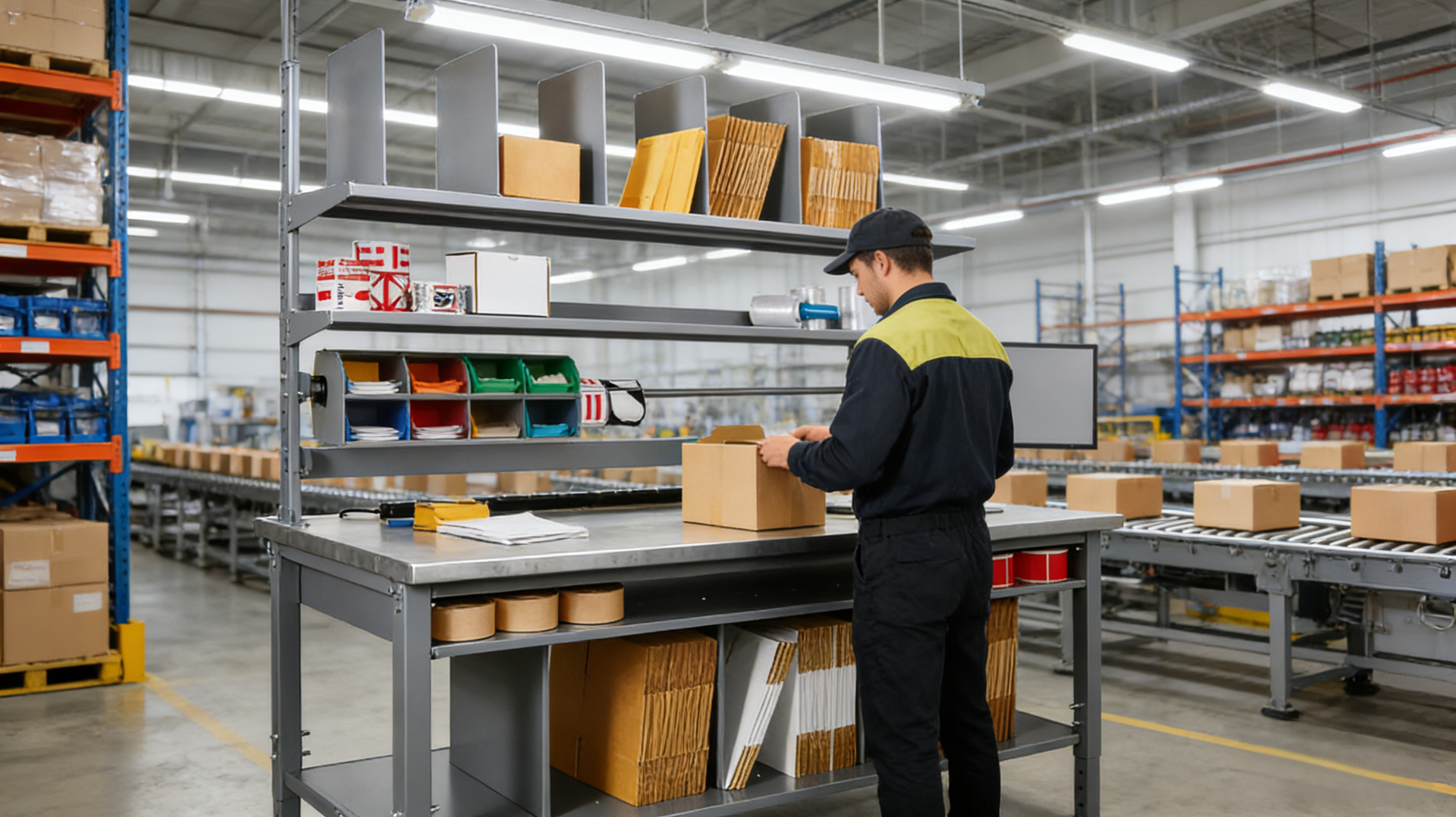
Final Tips
The right table cuts waste and boosts efficiency.
- Test with actual loads (2-week trials).
- Total cost = maintenance + replacement over 3–5 years.
- OSHA ergonomic compliance (height adjust for sit/stand).
- Future-proof – modular add-ons.
- Train staff on load distribution and height adjustment.
Balance productivity, ergonomics, and cost.